On February 1, 1894, James Price Johnson was born in New Brunswick, New Jersey to parents William H. Johnson, a mechanic, and Josephine Harrison, who worked as a maid. His father was a self-taught pianist and also sang in the church choir, which Johnson attributed to inspiring his musical career.
In 1908, Johnson and his family relocated to the San Juan Hill section of New York City, and within the next three years, the family moved again, this time further uptown. Throughout his youth in New Jersey and New York, Johnson often listened to ragtime. In 1912, he received his first paying job as a pianist, after practicing the instrument for years, and decided to pursue a career in music rather than attend college. For the following three years, Johnson extensively studied European piano tradition under Bruto Gianni, all the while practicing his favorite ragtime piano tunes and even composing his own.
Early Career
Johnson often performed with Lillie Mae Wright, whom he married in 1917. One night while the couple performed in Newark, Johnson met Willie Smith, and the pair soon became best friends; they toured the country together. By 1920, Johnson had gained an impressive reputation as a skilled pianist, performing nearly every single night.
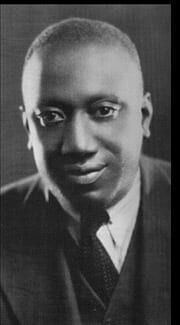 In the early 1920s, Johnson began to record his own compositions. These phonographic recordings were among the very first jazz piano solos ever recorded. His career hit a high point, but once the Great Depression began, Johnson’s fame soon started to dim; work slowed down, and as the swing era became increasingly popular, Johnson had trouble adapting to the changing music scene. Though he was already an established musician with a substantial catalog during this time, he still struggled financially.
As the years progressed, Johnson began to gain attention again. In 1940, he suffered from a stroke, but recovered and was back in business just two short years later. Johnson continued to expand his prolific career, constantly creating new works, and he even regularly shared stages with a number of popular musicians, including Louis Armstrong.
It wasn’t until his second stroke in 1951 that he finally threw in the towel. Considered to be the last major pianist of the classic ragtime era, James P. Johnson and his supreme skills left behind an incredible legacy against which so many modern pianists model their playing style.
Hero (Top) Feature Image: © Carly Weaver / Best of NJ
Additional Image Courtesy: Red Hot Jazz