Everett Frederic Morrow was born in Hackensack, New Jersey on March 20, 1906. He went on to attend Hackensack High School, during which time he served on the debate team for three years before becoming the team’s president during his senior year. He graduated in 1925.
After graduation, Morrow attended Bowdoin College in Brunswick, Maine until 1930. He was one of only two African American students enrolled in the college. Unfortunately, Morrow had to return to his home in Hackensack to assist his family before he was able to graduate; despite this, Bowdoin College awarded him an honorary LL.D. Degree much later, in 1970.
Early Career
As a part of the National Urban League, Morrow began working as a business manager at Opportunity Magazine in 1935. Then in 1937, he became a field secretary for the National Association for the Advancement of Colored People (NAACP). Morrow worked for the NAACP for a few years before joining the United States Army, in the midst of World War II; in 1942, after serving as a private for only a couple of months, Morrow earned a promotion to sergeant. Not long after, he graduated from Officers Candidate School and was discharged as a Major of Artillery in 1946.
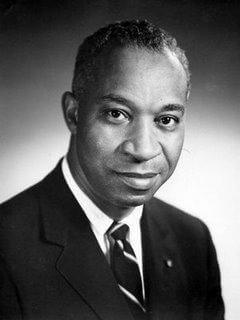 After being discharged, Morrow worked briefly as a writer for CBS before joining Dwight D. Eisenhower’s campaign in 1952, where he served in the U.S. Commerce Department. Once Eisenhower took office, Morrow became the Administrative Officer for Special projects in 1955, also becoming the first African-American to hold an executive position in the White House.
A Story or Two to Tell
Morrow often faced difficulties regarding race and integration during his time at the White House; Brown v. Board of Education, the Montgomery Bus Boycott, and the Little Rock crisis were all catalysts for a turning point in the nation, and increased Morrow’s frustration as he watched a cautious federal government approach these issues.
In 1963, Morrow wrote a book titled Black Man in the White House; throughout the book, he describes his experiences during his time under the Eisenhower administration. He published one autobiography, Way Down South Up North, in 1973; then another autobiography, Forty Years a Guinea Pig: A Black Man’s View from the Top, in 1980. He lived a quiet life after retirement, until passing away at Mount Sinai Hospital in NYC on July 20, 1994.
To continue reading more Black History NJ stories, click here to get the complete series.
Hero (Top) Feature Image: © Carly Weaver / Best of NJ
Additional Image Courtesy: HackensackSchools.org