William James “Count” Basie was born in Red Bank, New Jersey on August 21, 1904. Basie grew up in a music-oriented family; his father played the mellophone, and his mother played piano (she gave Basie lessons in his youth). During junior high school, he spent much of his time at the Palace Theater in Red Bank, where he gained free admission from doing smalls jobs for the theater. It was here he adapted impressive improvisational piano methods.
Even though he was a natural pianist, Basie preferred the drums; he got discouraged by the remarkable skills of popular drummer Sonny Greer (also of Red Bank), however, and decided to play piano exclusively. Basie actually played with Greer until Greer went off to play with Duke Ellington in 1919. By that time, Basie was playing at resorts and various other shows and adult dances.
Early Success
Basie decided to venture to Harlem in 1920, where he ran into Greer who introduced him to the Harlem jazz scene. Though Basie’s career did not immediately take off, he began playing many more shows with various different acts in the mid-1920s, improving his already dynamic skills. He and his bandmates would often improvise their songs, rarely (if ever) using any sheet music.
In 1928, a few months after hearing the Oklahoma City Blue Devils in Tulsa, Basie was asked to join the band. While with the very popular Blue Devils, Basie adopted the nickname “Count.”
The Oklahoma City Blue Devils experienced significant changes over the next eight years, and by 1936 when they relocated to Chicago, they had changed their name to Count Basie and His Barons of Rhythm. Their shows garnered great responses from patrons, and in October of 1936, the band began their first recording session.
Later Life
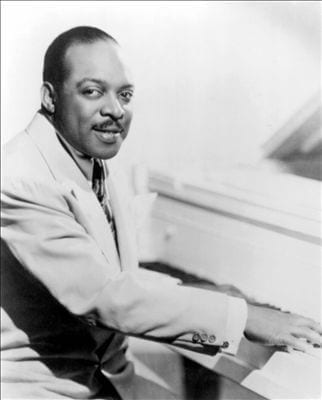 Though the group recorded a number of songs together, the new formation was short-lived; Basie continued his musical career solo, performing with numerous other popular jazz and blues artists; including Billie Holiday, Joe Williams, Helen Humes, and Big Joe Turner.
Count Basie continued his immensely significant musical career throughout the swing era, World War II, and the decades to follow; introducing the country to his momentous Big Band sound. He received great praise from fans and critics alike, even performing at one of John F. Kennedy’s Inaugural Balls. On April 26, 1984, one year after his wife’s passing, Basie died of pancreatic cancer in Hollywood, Florida, leaving behind a monumental jazz and blues legacy.
Hero (Top) Feature Image: © Carly Weaver / Best of NJ
Additional Image Courtesy: All Music.com