In the 1950s and ‘60s, New Jersey was no stranger to the Civil Rights Movement, which pushed the country towards a much greater sentiment of social justice and tolerance. Along with the South, New Jersey played a role in the movement as well as the events leading up to it. One major component was young New Jerseyan, Edith Savage-Jennings.
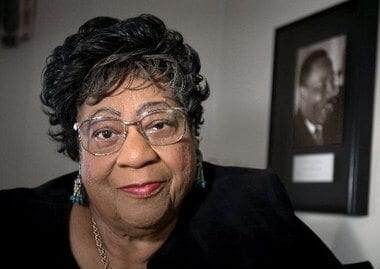
Civil rights “champion” (as they call her) Edith Savage-Jennings was born in Jacksonville, Florida in the early 1920s. Savage-Jennings was one of six children. After her parents died when she was just two-years-old, she and her siblings moved in with their aunt, and soon enough, the family headed for the Garden State.
[bibblio style=”bib–row-3 bib–hover bib–white-label bib–font-arial bib–default bib–size-16 bib–shine” query_string_params=”eyJ1dG1fc291cmNlIjoiQmliYmxpbyIsInV0bV9tZWRpdW0iOiJNb2R1bGUiLCJ1dG1fY2FtcGFpZ24iOiJSZWNvbW1lbmRhdGlvbnMifQ==” recommendation_type=”optimised”]
Edith Savage-Jennings: An Early Activist From an Early Age
The first signs of Savage-Jennings’s activist spirit came in the early 1930s when she met then-First Lady Eleanor Roosevelt on behalf of the New Jersey State Federation of Colored Women’s Clubs. Even though she was specifically instructed not to say anything to Roosevelt, Savage-Jennings told the First Lady, “I want to thank you for being so nice to colored people.” From that day forward, the two remained friends until Roosevelt died in 1962.
 When Savage-Jennings was 13, she became a major part in integrating the Capital Theater in Trenton. As a teenager who was afraid of heights, Savage-Jennings refused to sit in the balcony of the then-segregated theater. Instead, she took a seat in the second row and did not move throughout the remainder of the show, despite the usher and manager’s grave requests to remove herself from the “wrong” seat.
The following week, she and her friends returned and took the same seats without contest.
Savage-Jennings remained a local civil rights leader throughout the years in New Jersey. Even at her first jobs at both the sheriff’s office and the Mercer County Detention Center, she spoke out against social injustice and discrimination.
A Meeting with (the) King
In 1957, Savage-Jennings met Dr. Martin Luther King, Jr., who she remained close friends with for the next 11 years. King would call her anytime to ask her opinion on various subjects and matters, and on the morning of the day he was assassinated, he asked Savage-Jennings to remain close with his wife in case anything ever happened to him.
Edith Savage-Jennings has never ceased her fight for the rights and respect of those who deserve it. Over the years, she has won more than 100 awards and honors for her work in civil rights, leading up to her induction into the New Jersey Women’s Hall of Fame in 2016. Beginning last year, the City of Trenton declares February 19 Edith Savage-Jennings Day, a day they will celebrate in the city and the state for years to come.
To continue reading more Black History NJ stories, click here to get the complete series.
Hero (Top) Feature Image (& Additional Image): © Museum of Women’s Resistance / Website